Redding highlight
Sundial Bridge
A 700-foot pedestrian and cyclist bridge designed by Santiago Calatrava, opened July 4, 2004, that functions as one of the world's largest working sundials.
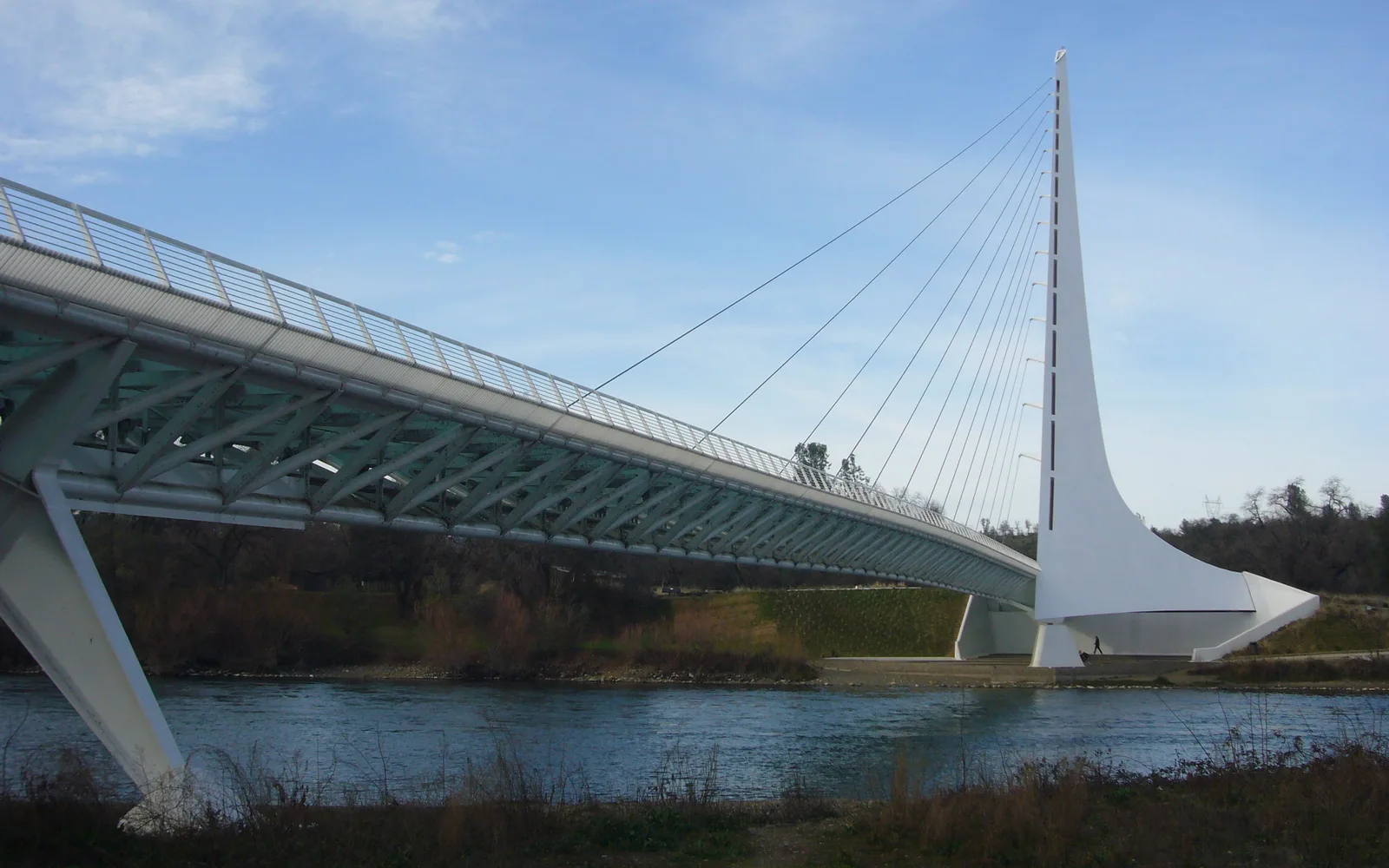
The Sundial Bridge crosses the Sacramento River at Turtle Bay in Redding, connecting north and south sections of the Turtle Bay Exploration Park. Designed by Spanish architect Santiago Calatrava and completed in 2004, the bridge is 700 feet long, 23 feet wide, and rises 217 feet through a single pylon. Construction cost $24 million, largely funded by the McConnell Foundation. The bridge's deck is made of translucent glass and granite with a non-skid surface, and over 4,300 feet of cable supports the structure.
The bridge is engineered as a working sundial: its 217-foot pylon casts a shadow across the deck that moves approximately one foot per minute, visible from 11 a.m. to 3 p.m. The design was deliberate in protecting the river habitat below. Rather than using supports that would disturb salmon-spawning grounds, Calatrava designed the bridge with cable stays that span the water without obstruction. The bridge and surrounding river trails are free and open to the public daily.
Structures that serve both practical and symbolic purposes often reflect what communities value most. The Sundial Bridge draws residents and visitors daily to a place where recreation, engineering, and environmental stewardship meet. Families in Redding rely on traditions—seasons at the river, milestones with people they care about—and the people who support those traditions need the security of a financial plan. A term life policy sized to your income and the years your family depends on it offers that same combination of foresight and protection.