Redding highlight
Gateway to Shasta Lake
Shasta Lake, formed by a 602-foot concrete dam completed in 1945, lies nine miles northwest of Redding and supplies irrigation, hydroelectric power, and recreation to Northern California.
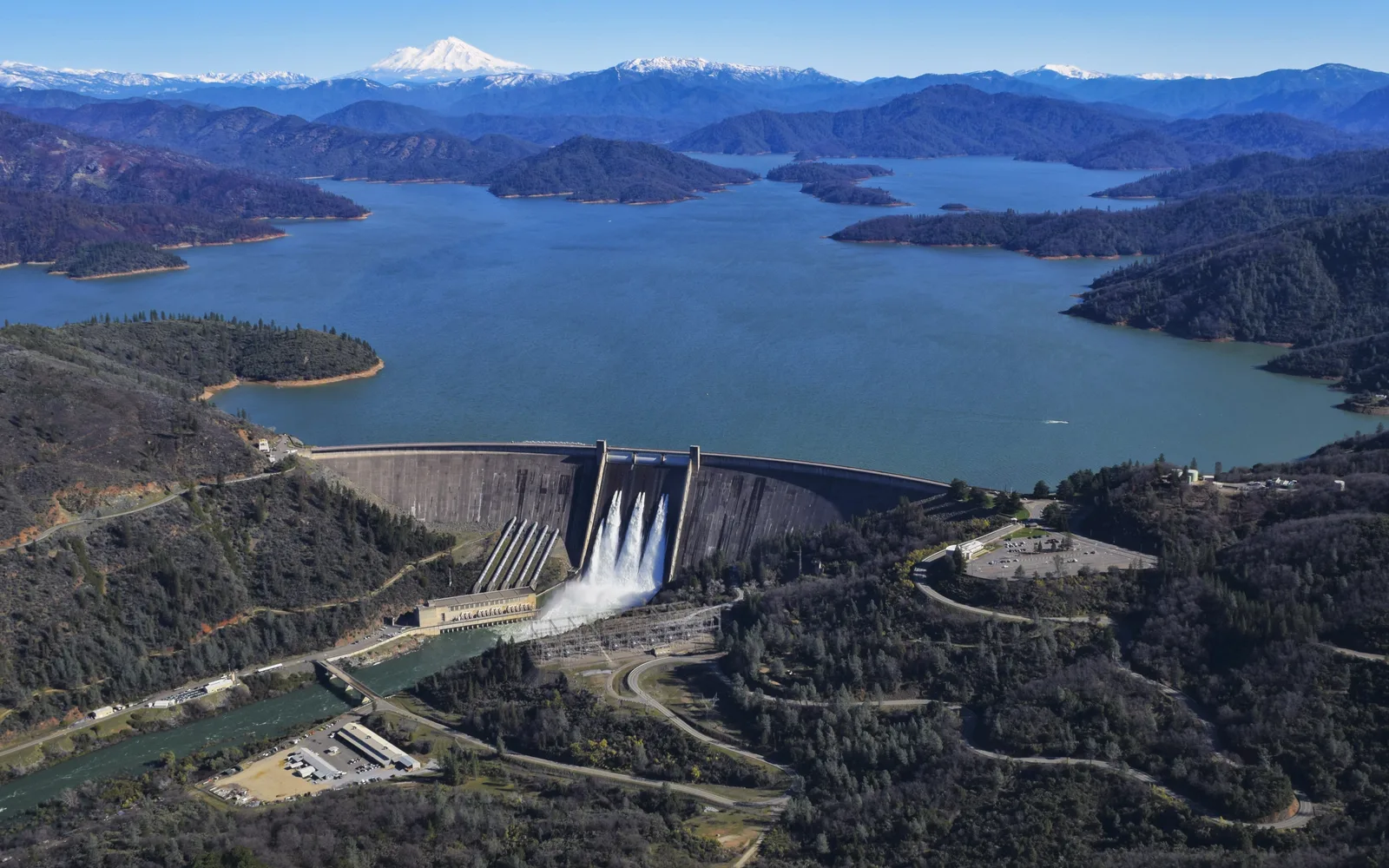
Shasta Dam was constructed between 1938 and 1945 on the Sacramento River about nine miles northwest of Redding. The dam is 602 feet high and is a concrete gravity structure. Shasta Lake, formed by the dam, holds approximately 41 percent of all water stored in the federal Central Valley Project. The reservoir collects water from the Sacramento, Pit, and McCloud rivers, plus Squaw Creek. The drainage basin receives an average of 62 inches of annual precipitation annually.
The dam serves multiple purposes for Northern California and the broader region: irrigation water supply for farms throughout the Central Valley, municipal and industrial water, flood control, salinity management for the Sacramento-San Joaquin Delta, hydroelectric power generation, and environmental flows for fisheries. The Shasta Powerplant, first operated in 1944, now has an installed capacity of 663,000 kilowatts. The Livingston Stone National Fish Hatchery, operated by the U.S. Fish and Wildlife Service, protects endangered winter-run Chinook salmon and delta smelt. The lake offers 145 miles of shoreline with boating, fishing, swimming, water skiing, camping, and hunting. Public visitor tours operate Friday through Tuesday at the Shasta Dam Visitor Center, featuring walks across the dam top, a 400-foot elevator descent, and powerplant tours.
The presence of Shasta Lake changed Redding from a small gold-rush town into a supply hub for a region where natural resources drive livelihoods. Families here often depend on seasonal work, outdoor recreation, or small businesses tied to the land. That economic interdependence—where one person's income supports a household, a business, or a grandparent's care—is exactly why term life insurance matters. A policy that replaces income for the years when dependents need it most is a practical reflection of how Redding families actually live.